Which smartphone brands does ChatGPT recommend in Ukraine?
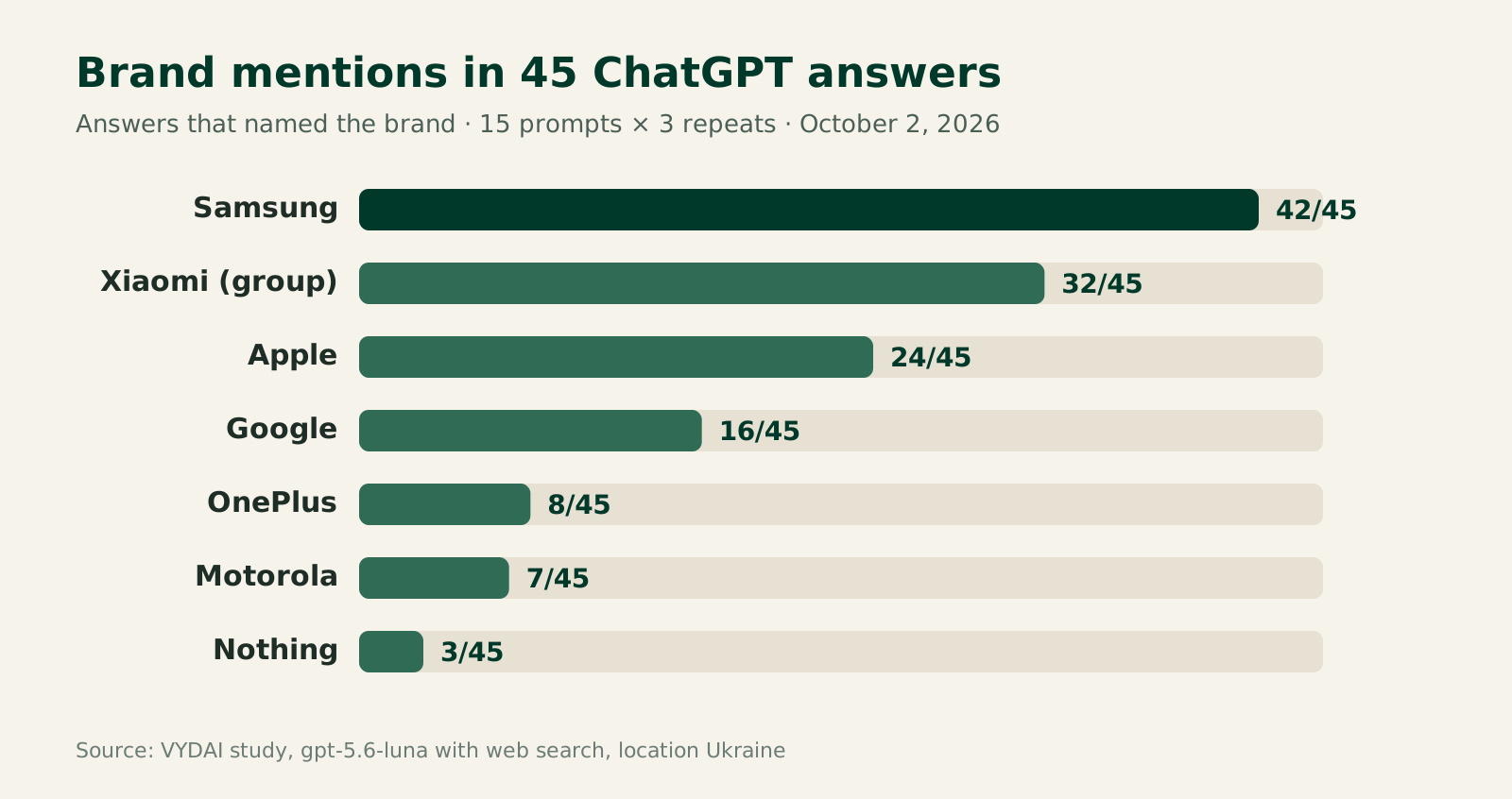
In a test run through the OpenAI Responses API, Samsung appeared in 42 of 45 answers, Xiaomi and its sub-brands together in 32, and Apple in 24. These are text mentions, not measures of phone quality, sales, or market share. The method, prompts, cited domains, and limits are included so readers can repeat the test.
How we tested ChatGPT’s recommendations
We ran the study on October 2, 2026, in the Europe/Kyiv time zone. We sent 15 independent Ukrainian-language prompts to gpt-5.6-luna through the OpenAI Responses API, using the web_search_preview tool and an approximate location in Ukraine. As of October 2026, this matches the model and regional search setup VYDAI uses for its ChatGPT checks. OpenAI’s Responses API web search documentation describes the search tool and citation annotations. Each prompt was sent three times in a separate request with no conversation history, producing 45 complete answers. Thirteen earlier attempts were incomplete because the response reached its output limit, so we retried them; only the completed answers entered the analysis.
The system instructions matched VYDAI’s: use Ukraine as the regional context, format the response in Markdown, and embed links in the answer. We did not add a language instruction.
The user prompts below were all in Ukrainian to test realistic phone-buying scenarios.
| Segment | Exact prompt sent to the model |
|---|---|
| Budget under UAH 10,000 | Який смартфон краще взяти до 10 тисяч гривень в Україні зараз? |
| Budget UAH 10,000–20,000 | Порадь телефон за 10–20 тисяч грн, щоб вистачило на кілька років. |
| Budget UAH 20,000–35,000 | Який смартфон купити за 20–35 тисяч гривень? Важливі нормальна камера і батарея. |
| Flagship | Який флагман зараз вартий своїх грошей в Україні? |
| Camera | Який телефон зараз найкраще фотографує, особливо ввечері? |
| Battery | Який смартфон довше тримає батарею при звичайному користуванні? |
| For an older adult | Порадь смартфон для мами 65 років: щоб великий екран, простий у користуванні і не гальмував. |
| For a teenager | Який телефон підійде підлітку для навчання, соцмереж і нормальних фото? |
| Gaming | Який смартфон краще для ігор і щоб сильно не грівся? |
| Comparison | Що краще купити: iPhone чи Samsung, якщо телефон беру на кілька років? |
| Comparison | Xiaomi чи Samsung краще взяти за однакові гроші? Що надійніше? |
| Reliability | Який бренд смартфонів найнадійніший і має нормальну підтримку після купівлі? |
| Avoiding a brand premium | Який смартфон зараз краще купити в Україні, якщо не хочу переплачувати за бренд? |
| Work, navigation, photos | Який телефон взяти для роботи, навігації й фото, бюджет до 25 тисяч? |
| Compact phone | Порадьте смартфон компактного розміру, щоб зручно користуватись однією рукою. |
We counted any brand name in the answer, including comparisons and alternatives. iPhone was normalized to Apple, Pixel to Google, and Xiaomi, Redmi, and POCO were grouped as Xiaomi; Redmi and POCO were also counted separately. “First position” means the first brand name in the answer text. It is a repeatable proxy for the first recommendation, not a judgment that the model chose a best brand. All results below were calculated from the 45 saved answers and their cited URLs.
How does ChatGPT recommend smartphone brands
The model received a short question in Ukrainian and could use web search. We did not give it a list of brands or tell it to choose a winner. The table therefore reflects names that appeared in answers to the scenarios, not a preset candidate list.
Which phone brands does ChatGPT recommend for different needs
Camera, battery, school, gaming, and everyday-use prompts included Samsung, Apple, Xiaomi, and Google. Across the 21 answers in this segment, Samsung appeared 18 times, Apple and Xiaomi 13 times each, and Google 9 times, according to the study’s segment breakdown. An answer could name more than one manufacturer, and mention counts cannot tell us which phone is best for a particular buyer. People with different needs should check individual models against their priorities.
Which smartphone brands does ChatGPT mention most often
Samsung appeared often in the answers, while Xiaomi and Apple also recurred across prompt types. The table counts text mentions, including alternatives; it is not a phone ranking. Values come from the 45 complete answers collected on October 2, 2026.
| Brand or group | Answers with a mention | Share of answers | Prompts with a mention in at least 2 of 3 repeats | First brand named |
|---|---|---|---|---|
| Samsung | 42/45 | 93.3% | 14 | 23 |
| Xiaomi group | 32/45 | 71.1% | 12 | 10 |
| Apple | 24/45 | 53.3% | 7 | 3 |
| 16/45 | 35.6% | 6 | 2 | |
| OnePlus | 8/45 | 17.8% | 3 | 4 |
| Motorola | 7/45 | 15.6% | 1 | 2 |
| Nothing | 3/45 | 6.7% | 0 | 0 |
| Asus | 2/45 | 4.4% | 1 | 0 |
| Infinix | 1/45 | 2.2% | 0 | 0 |
| Realme | 1/45 | 2.2% | 0 | 0 |
| Sony | 1/45 | 2.2% | 0 | 0 |
| Tecno | 1/45 | 2.2% | 0 | 0 |
| Vivo | 1/45 | 2.2% | 0 | 0 |
| ZTE | 1/45 | 2.2% | 0 | 1 |
Within Xiaomi group, Redmi appeared in 15 answers and POCO in 14. Those sub-brand counts are separate from the group total of 32 because an answer could name Xiaomi and one or both sub-brands. The first-position counts may also include Xiaomi sub-brands, which are combined in the main table.
The brand mix also differed by prompt. Across 12 answers to budget prompts, Samsung appeared 12 times, Xiaomi group 10 times, Google 6 times, and Apple 4 times. These counts come from the segment breakdown in the same dataset. Totals overlap because an answer could mention several manufacturers.
Across the six comparison answers, Samsung appeared in all six, Apple in three, and Xiaomi group in three. For the three general prompts without a brand premium, Motorola and Samsung each appeared three times, Xiaomi group also appeared three times, and Apple once. The reliability prompt produced three mentions each for Apple, Samsung, and Xiaomi group, plus one for Google. Three answers are too few to establish that any brand is objectively more reliable.
Does ChatGPT change its smartphone recommendations when the prompt changes
Yes. The names varied with the scenario. For example, the three general prompts that did not ask for a premium brand each brought up Motorola, while the gaming prompt had the least consistent set of names across repeats, according to the study’s segment and overlap calculations. In the iPhone-versus-Samsung comparison, the answers stayed focused on those two brands. These are patterns in this test, not rules for every ChatGPT query.
The budget segment used four wordings, while use-case prompts covered a camera, battery, older adult, teenager, gaming, work with navigation, and compact size. Segment results combine answers to these different needs. They do not show that any brand is the best fit for every use case.
How consistent were the repeated answers
To measure consistency, we compared the brand sets in every pair of answers to the same prompt. The Jaccard score is the size of the overlap divided by the size of the combined set. In plain English, the score rises when two answers name more of the same brands. The average of the three pairwise scores for each prompt, averaged across prompts, was 67.1%, calculated from the saved answers.
The two direct comparisons, iPhone or Samsung and Xiaomi or Samsung, were the most consistent under this measure. All three answers in each set named the same brands. The gaming prompt had the lowest average, meaning its three brand sets overlapped the least. That does not tell us whether the advice was wrong. Per-prompt scores are available in the study’s internal analysis; they describe these repeats only.
A repeated brand mention does not establish accuracy. The same model may name a brand consistently and still get a phone specification wrong. Before buying, check specifications on the manufacturer’s site, warranty support, and the seller’s current listing.
Which sources does ChatGPT cite in smartphone recommendations
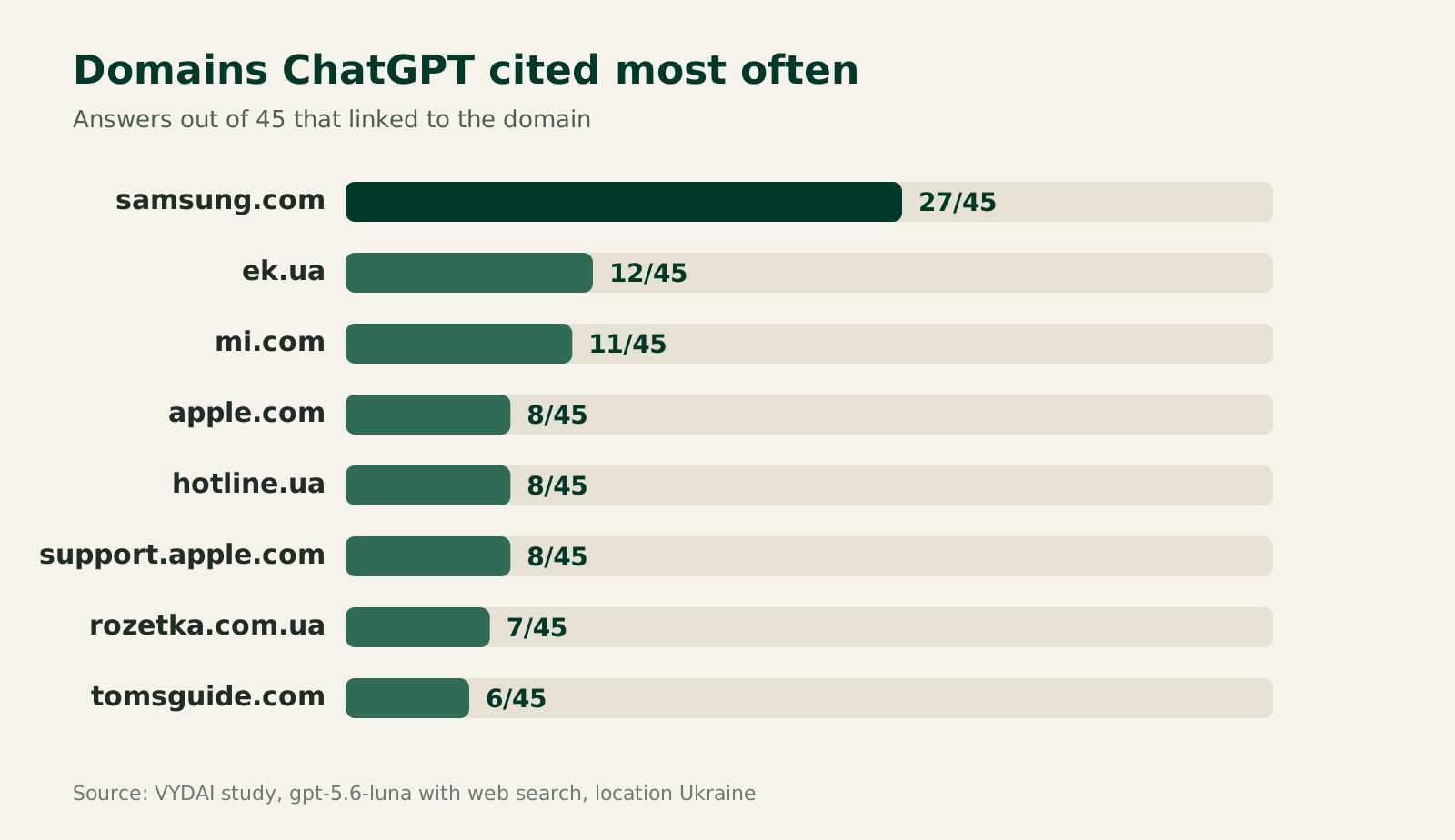
All 45 of 45 complete answers included at least one URL in their citation annotations, so 100% of this sample had a citation. We counted a domain once per answer, regardless of how many pages from that domain it cited. Counts and shares below were calculated from the October 2, 2026 study log; source types were classified from the sites. Each link is an example page from that cited domain, not proof that the page caused a recommendation or that its contents were correct.
| Domain | Answers citing the domain | Share of 45 answers | Source type |
|---|---|---|---|
| samsung.com | 27 | 60.0% | Manufacturer |
| ek.ua | 12 | 26.7% | Product catalog and price comparison |
| mi.com | 11 | 24.4% | Manufacturer |
| apple.com | 8 | 17.8% | Manufacturer |
| hotline.ua | 8 | 17.8% | Product catalog and price comparison |
| support.apple.com | 8 | 17.8% | Manufacturer support |
| rozetka.com.ua | 7 | 15.6% | Retailer |
| Tom’s Guide | 6 | 13.3% | Technology publication and reviews |
| support.google.com | 4 | 8.9% | Manufacturer support |
| GSMArena | 3 | 6.7% | Technology publication and reviews |
| mi.ua | 3 | 6.7% | Brand’s official store |
| news.samsung.com | 3 | 6.7% | Manufacturer news |
| TechRadar | 3 | 6.7% | Technology publication and reviews |
| RedMagic | 2 | 4.4% | Manufacturer |
| Google Store | 2 | 4.4% | Manufacturer store |
Samsung.com was the most frequently cited domain, followed by the EK.UA catalog and Xiaomi’s site. The list includes manufacturer pages, reviews and reference material from technology publications, plus retailer and product-catalog pages. A single answer could cite more than one type. Domain counts do not show which particular page led the model to mention a brand.
Do ChatGPT smartphone recommendations reflect phone popularity in Ukraine
No. Brand mentions in answers and mobile web traffic measure different things. For comparison, we checked the StatCounter snapshot available on the study date for September 2026: Apple had 37.73% of Ukraine’s mobile web traffic, Xiaomi 24.38%, and Samsung 19.38%. StatCounter measures page views on sites using its counter, not sales or the installed base of phones; see StatCounter’s methodology and its Ukraine mobile vendor report. We checked this snapshot on October 2, 2026.
Samsung led the mention table in our test, while Apple ranked first in that web-traffic snapshot. That is not a contradiction: ChatGPT answered editorial buying prompts, while StatCounter counted web page views. The prompt sample was not random, and our brand counts include alternatives, not only recommendations. This side-by-side view can motivate another check, but it cannot establish phone popularity, sales, or a causal link.
How do ChatGPT recommendations compare with smartphone web traffic in Ukraine
Align the geography, period, and manufacturer names, then state what each source measures. Do not treat a traffic percentage as a share of recommendations: one answer can name several brands, and the device categories and observation periods may differ.
What a brand can learn from this test
For a phone maker, the source table suggests checks to run, not a ready-made media plan or a sales forecast.
- Check whether your public pages give clear specifications and support details. Citations in this test included Samsung’s software update instructions, Pixel hardware specifications, and Xiaomi’s Redmi Note 14 specifications. These are examples of pages in the answers, not evidence that they determined the model’s choice.
- Compare manufacturer pages with independent reviews that cover the scenarios buyers ask about. The dataset included a camera guide from Tom’s Guide and a battery-life resource from GSMArena. Make it clear who a model is for and where its specifications come from.
- Keep price and availability information clear. Product catalogs and retailers, including EK.UA, Hotline, and Rozetka, also appeared in the citations. A store listing can show a price or stock status at the time it is viewed, but it is not a substitute for independent quality testing.
These are hypotheses prompted by the observed citations, not a verified causal model. To test them in your category, compare the pages that the system cites with your own sources using the same prompts and search location.
How to repeat the study in your niche
Start with prompts that resemble real buyer decisions. Include broad questions, budget limits, use cases, and comparisons, but avoid dozens of near-duplicate phrasings. Before collecting answers, define what you will count: any mention, a direct recommendation, the first brand in the list, or a citation to your site.
Send each prompt separately and repeat it under the same regional settings. Keep the complete answer, date, model, search settings, and every citation URL annotation. Then apply consistent brand-normalization rules, use only complete answers in the denominator, and manually review cases where the model compares brands instead of recommending one.
To measure variation, compare the brand sets from repeated answers to the same prompt. For sources, counting each domain once per answer is clearer than summing every URL, since an answer can cite several pages from one site. If you compare results with web analytics, align the market, device category, and time period, and explain that it is a different measure. Repeat the study later with the same prompts before claiming a change.
This protocol makes the limits visible, but it cannot guarantee the same answer on another day or in the ChatGPT app. For a study in another product category, see how AI chooses products for ecommerce. For source analysis, see how to analyze the sources AI relies on. A separate article compares how ChatGPT, Gemini, Claude, and other systems choose brands.
Frequently Asked Questions
Does ChatGPT recommend the same phone brands to everyone? No. In this test, the brand set changed by scenario and sometimes between repeats, so people did not always get the same phone brands for different needs. ChatGPT did not recommend the same set to everyone in our sample. The average overlap across prompts was 67.1%, calculated from the 45 saved answers. Different language, model, date, region, or settings may produce a different result.
Does ChatGPT recommend one best smartphone brand? The tested answers named several brands rather than one consistent winner. Mention counts do not determine the best phone for an individual buyer. Compare models within your budget and verify specifications with the manufacturer.
Can mention frequency identify the most reliable brand? No. The reliability prompt produced three mentions each for Apple, Samsung, and Xiaomi group across three answers, but the study did not measure failure rates, warranty claims, or product lifespan. Those claims need separate repair and support data.
What counted as the first recommendation? We recorded the first brand named in the answer text. This is a simple counting rule, not an interpretation of the whole response: the first name could appear in the introduction even if the answer later shifted its emphasis.
Does a ChatGPT citation prove that a claim is correct? A citation shows which page the answer presented as a source. It does not by itself verify a current price, a comparison, or whether a phone fits your needs. Check specifications with the manufacturer and consult an independent review.
How we do it in VYDAI
This study replicated the ChatGPT check setup used by VYDAI, with web search and an approximate location in Ukraine. It does not measure every ChatGPT answer or all five systems monitored by the product.
As of October 2026, VYDAI records brand mentions and cited sources across ChatGPT, Gemini, Claude, Google AI Overviews, and Google AI Mode. In the report, you can open answers by prompt, review sources, and compare competitor appearances. That lets you track which smartphone brands ChatGPT recommends in answers to your prompts. See the VYDAI demo or create an account. The service measures system answers; it does not control which brands they recommend.