ChatGPT recommends a competitor when that company’s pages and available sources better match the prompt, or when the prompt describes a need your business does not meet. To find the specific reason, compare the prompt, the explanation in the answer, and the cited URLs with your own pages and their search access. Citations show pages you can inspect; they do not reveal the model’s internal decision process.
A first check gives you a useful baseline
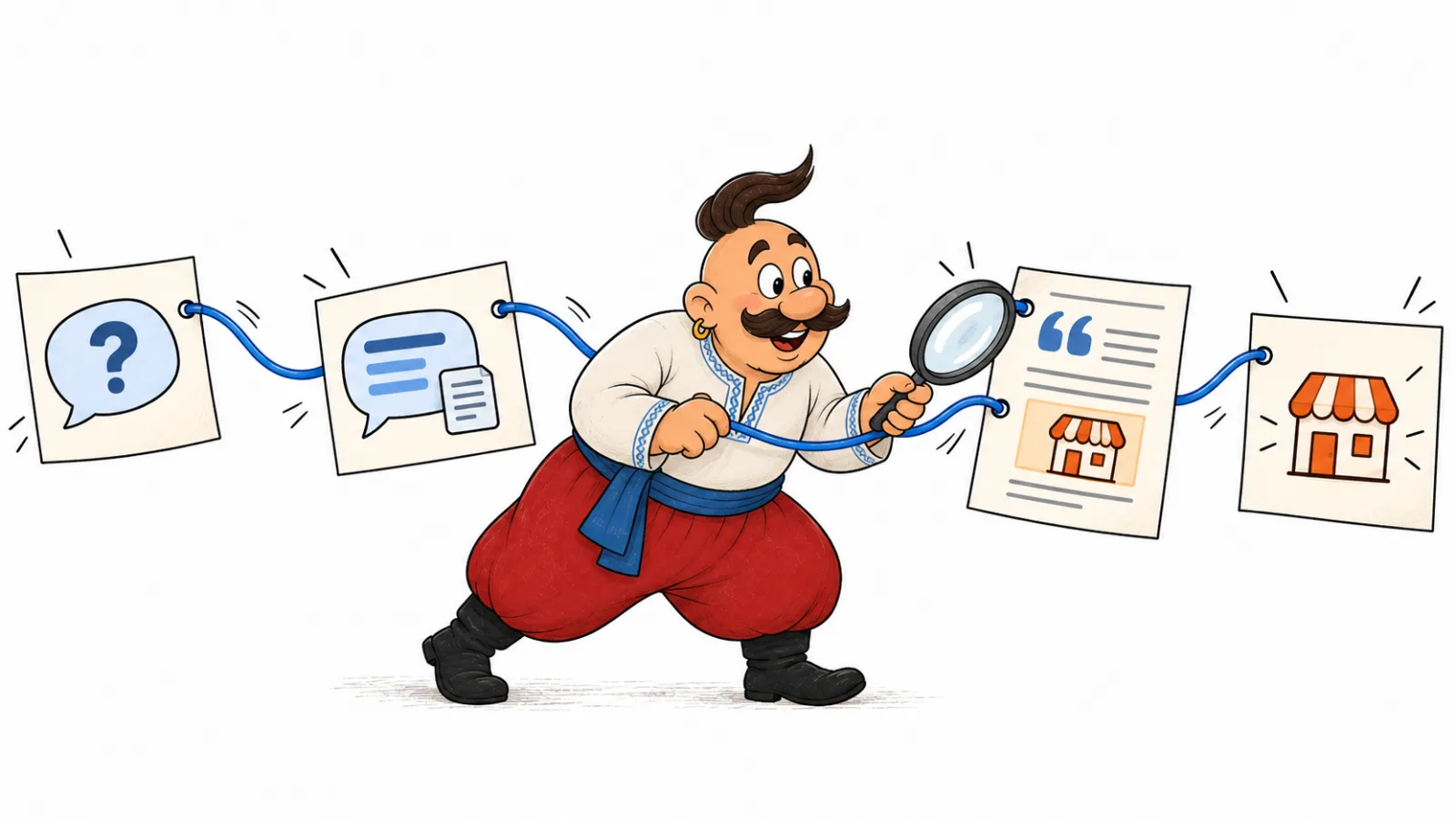
Run the same prompt with the same search setting. Record the date, named brands, a short answer excerpt, and every URL ChatGPT shows. This is how to find brands recommended by ChatGPT in a particular scenario and compare them on a later check. Include your brand name only when you are studying a branded scenario. For a recommendation from a buyer who does not know your company, leave it out.
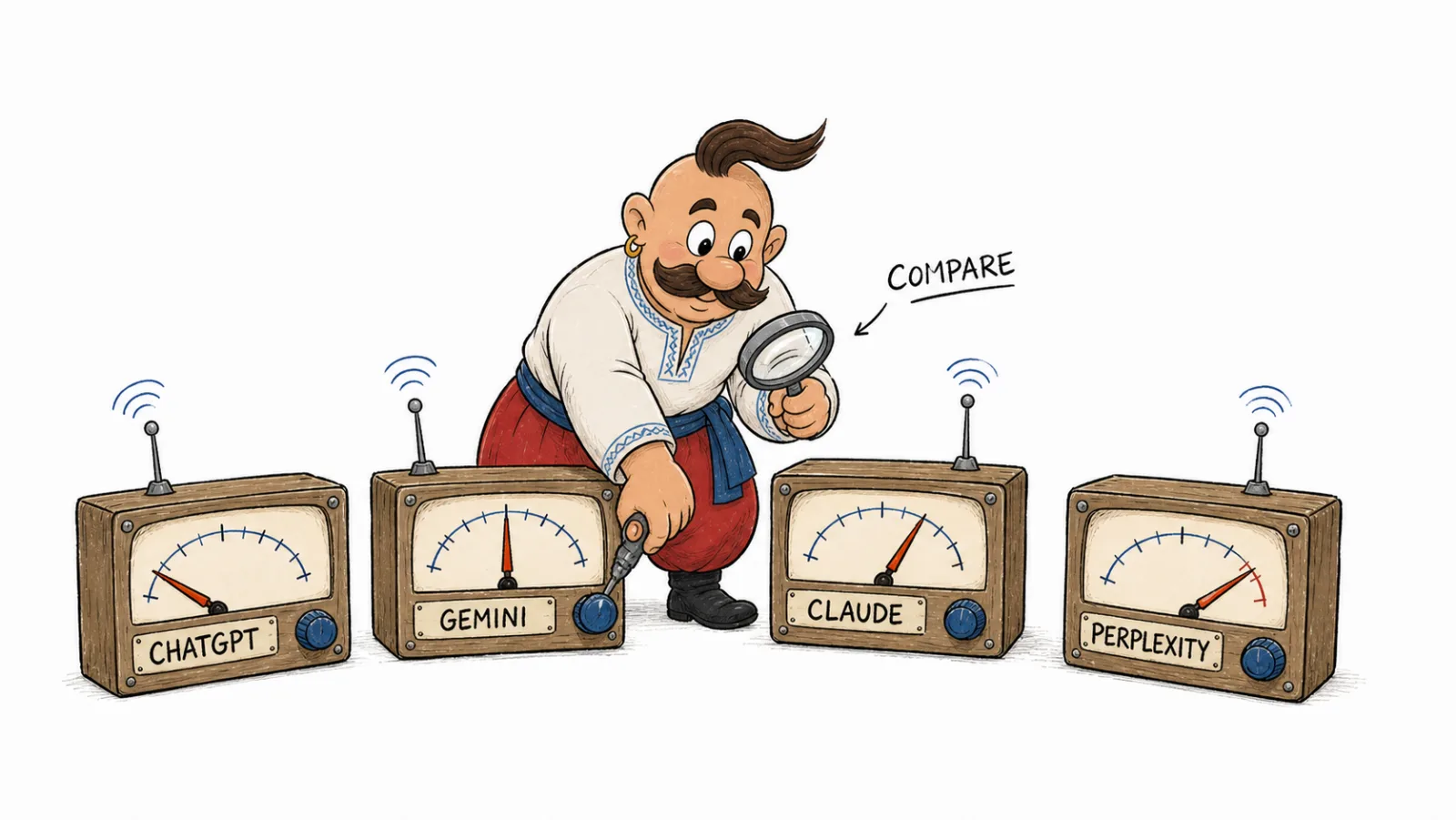
In a study of ChatGPT, Gemini, and Perplexity recommendations, the author analyzed 3,750 answers to 250 brand-free queries for 50 brands across five industries, repeating each query five times. In that sample, the top-recommended brand matched across systems in 41.6% of cases, so compare systems separately rather than carrying one system’s winner over to another (study method and results).
A separate 2026 study tested buyer descriptions in a controlled set of 2,000 runs, 10 buyer personas, eight prompts, and three model configurations; the authors found that buyer context changed the sets of brands recommended (audit of persona-conditioned recommendations). Include constraints that matter to customers, such as location, service type, budget, or hours.
ChatGPT competitor analysis: prompt, answer, and source
Save the exact prompt, answer, and URLs shown. This makes ChatGPT competitor analysis traceable to pages you can open instead of guesses about an algorithm.
| What to record | What to check | Action |
|---|---|---|
| Prompt | What need, location, and constraints did the person name? | Keep the wording unchanged for the next check |
| Answer | Which brands did the system name, and how did it describe them? | Separate the system’s exact wording from your own conclusion |
| Source | Which URL appeared, and what on the page supports the answer? | Open it and record the title, publisher, and date |
| Your brand | Does it appear, and does it meet the stated condition? | Compare the answer with your page and actual offer |
As of October 2026, OpenAI’s guide to ChatGPT search says search answers may include citations, and the Sources panel shows cited sources and other relevant links. Open the links and check the claim because OpenAI notes that sources may be incomplete, outdated, or incorrect.
If an answer has no links, record that separately. This distinguishes a brand mention from visibility among the web sources shown.
To compare how systems answer the same prompt, see how AI systems choose brands.
Types of competitors in AI answers
For GEO competitor analysis, first label the role each brand plays in the answer. This helps you choose a check before rewriting pages.
| Brand role | How to recognize it | What to check |
|---|---|---|
| Direct competitor | Offers a similar product or service for the same use case | Compare terms, audience, and the pages cited in the answer |
| Alternative for another need | The system names it in connection with a specific constraint | Check whether your business meets that constraint |
| Listing or directory source | The answer cites a roundup, profile, or reviews | Open the source and check how each brand is described |
| Name outside your category | The company does not sell a similar service or product | Check for name ambiguity and read the full answer context |
Our practical walkthrough of ChatGPT product recommendations shows how a buyer’s need shapes a shortlist. Apply the same approach to services: what need put this competitor on the shortlist?
Four levels for checking an answer
Who appeared
Record the exact name and domain. Confirm that it is a company in your category, not a marketplace, directory, or business with a similar name. If the prompt names a city, check that the answer actually named a local company.
How the system described the recommendation
Save the answer’s exact wording. If it says “fits a small team,” find that condition on the cited page and check whether your page addresses the same use case. Compare one condition at a time, such as location, hours, or price, across both sources. This turns a general impression about a stronger offer into a specific editorial or product task.
Which pages it cites
Open each URL and record the title, publisher, date, claim, and place where the brand appears. Check whether the page is an editorial review, a company directory, or a profile with reviews, and verify the claims it makes. For a structured review, read how to analyze ChatGPT sources and citations and which AI trust sources support a brand.
Which condition your offer is missing
Compare the prompt’s requirements with your actual service, location, hours, and price. If a page omits a confirmed feature, add accurate information and evidence. If your business does not meet the condition, focus measurement on scenarios your offer can serve. A prompt about urgent service needs current booking and opening-hour information; a local query needs an accurate address and service area on the page.
Why AI may name a competitor
Compare the answer with its sources and check which explanation best fits the visible evidence. For each, record the relevant answer excerpt or page, then take the matching action.
| Possible reason | What to look for in answers and sources | What to do |
|---|---|---|
| The competitor has a comparison or “best X” page | ChatGPT cites that page or repeats criteria listed there | Create a comparison page for real use cases and support every claim with your own evidence |
| Third-party lists, reviews, or directories include the competitor | The answer cites a directory, review, industry list, or a page with a specific description | Update your accurate business profile; ask the publisher to correct a factual error and provide evidence |
| Your category or location wording is unclear | The prompt asks for a service in a city, while your page does not name the service or location | Add verified service and location details to the relevant page |
| A search crawler cannot reach your page | Server logs show no crawler requests, robots.txt blocks the path, the page returns an error, or it has a noindex directive | Check URL access, HTTP status, robots.txt, and indexing. As of October 2026, OpenAI recommends allowing OAI-SearchBot for ChatGPT search inclusion, while Google says a page must be indexed and eligible for a search snippet to appear in AI Overviews or AI Mode |
| The model has a strong prior association with a category leader | The same well-known brand appears repeatedly in no-search answers, with no visible sources | Compare answers with search off and on. Treat a training-era association as a possibility because the answer does not expose specific training data. Anthropic publishes knowledge cutoff dates for Claude models, but not the training sources behind an individual answer |
| The prompt includes a constraint you do not meet | The answer chooses a competitor because of a stated budget, location, schedule, or customer type | Confirm the condition on your page. If your business does not meet it, do not disguise that in copy; measure scenarios your offer genuinely serves |
For crawl issues, check more than robots.txt. Google recommends reviewing server logs, Crawl Stats, and specific URLs in URL Inspection. These checks help distinguish a blocked page from server availability problems.
For repeatable checks, prepare prompts for real scenarios: a broad category choice, a comparison between offer types, a location-specific query, and a query with an important constraint. Keep the wording unchanged. After updating a page, rerun the same prompts and compare the answer text, cited sources, and your brand’s role.
Hypothetical example: a dental clinic in Lviv checks a prompt for a pediatric dentist who accepts patients on Saturdays. ChatGPT names a competitor and cites its pediatric dentistry page. The clinic should check its own page for pediatric care, address, and opening hours. If it is closed on Saturdays, that is a service constraint rather than a copy problem. If it is open but the site omits that information, the clinic can add it and repeat the same check.
How brands compare in AI answers
How to compare brands in AI answers? Keep each prompt on its own row and record the brand’s role, sources, system, search setting, and date. This helps distinguish a mention from a recommendation for a specific need or a citation to the brand’s own page.
| Field | What to record |
|---|---|
| Conditions | Exact prompt, system, search setting, and date |
| Mention | Which brands appeared and what role they played |
| Recommendation | Which brand the system connected to the stated need |
| Sources | URL, publisher, date, and claim about the brand |
| Next check | Whether the result held under the same conditions |
Keep prompts with different constraints separate in one measurement. If you calculate a share of mentions, define the denominator first and repeat the same set of checks. In VYDAI, the competitors page shows brand mentions and visibility for a configured prompt pool, with a breakdown by available systems. Check the metric explanation in the interface before comparing values.
How to analyze AI recommendations and choose an action
How to analyze AI recommendations? Turn each observation into a task you can verify. If a cited source contains a current fact about a competitor, check whether you have the same evidence. If you find a technical barrier, test it separately from editorial changes.
| Observation | Next action | How to check the change |
|---|---|---|
| A cited comparison has a selection criterion | Add a truthful answer to that criterion on your own page | Repeat the same prompt and inspect the sources |
| A directory has an outdated description | Send the publisher a specific correction with evidence | Check the updated page and the next answer |
| Your location or service type is missing | Add verified conditions to the relevant page | Repeat a prompt with the same city and need |
| A page cannot be reached by search | Fix the block, response error, or indexing issue | Check logs and URL status, then repeat the prompt |
| The prompt requires something your business does not offer | Exclude that scenario or change the actual offer | Measure prompts that match the service you provide |
This GEO competitor analysis connects visible evidence to a responsible action. Do not assign a task to “beat the competitor” without a specific page, condition, or source you can check.
Common checking errors
- Keep the full prompt so the same conditions can be reproduced.
- Open the cited URL before explaining the system’s choice.
- Record mentions, recommendations, and citations separately.
- Compare each prompt requirement with the real service and business location.
- Check Gemini, Claude, Google AI Overviews, and Google AI Mode separately before applying a ChatGPT finding to them.
Frequently Asked Questions
How to find brands recommended by ChatGPT? Save a neutral prompt, the named companies, the full answer, and the URLs shown. Check each system separately so you can compare recommendations under the same conditions.
Why does a competitor appear in ChatGPT answers? Start with the links and the prompt’s requirements. Compare the competitor’s description on the cited page with your actual offer, then record the specific difference.
How can I improve my brand’s visibility among ChatGPT recommendations? Find a specific gap in your page, profile, or search access. To outrank competitors in ChatGPT recommendations, first check that your offer meets the prompt’s condition, then change what the sources support. Repeat the same prompt and compare the answer and URLs.
How do I tell a brand mention from a recommendation? A mention means the name appears in the answer. A recommendation connects the company with a buyer’s need. A citation points to a page you can open and inspect.
What if a competitor is named because of a condition I do not meet? Leave that condition outside your target scenario or change the actual business offer. Describe only current services, hours, budgets, and locations on your site.
Why does AI recommend competitors instead of our brand? Check which source mentions the competitor, whether its description matches the prompt’s condition, and whether your page addresses the same need.
How we do it in VYDAI
On the VYDAI competitors page, you can review brand and competitor mentions for a project’s prompts and compare visibility across systems. As of October 2026, VYDAI monitors ChatGPT, Gemini, Claude, Google AI Overviews, and Google AI Mode. Inspect source links when a result includes them.
You can record an initial check in a spreadsheet. If you need to repeat the same review across a prompt pool, view the VYDAI demo or create an account. The report helps us see where brands and sources appear; inspect the answer itself before choosing a change.
To understand why ChatGPT recommends competitors, record the prompt, source, selection condition, and specific action you will check again.