A page usually drops out of AI answers because an individual response varies, search did not run, the page became unavailable, its facts grew outdated, a stronger source appeared, or the system switched to another page on your site. To find why AI stopped citing a page on your website, first check the same URL against the same prompts in each system across several dates, then investigate the cause. In Profound's study of AI citation half-life, 883,000 pages observed from September 2025 to September 2026 had a median of 11 days from peak citation share to half that peak.
How long does an AI citation last: what the studies show
Citation decay describes how often a source appears in AI answers over time. To measure its duration, define the starting point, unit of observation and condition that counts as a sustained decline. The two published studies below measure the process differently.
| Who, when and what was measured | Sample and unit | Definition and result |
|---|---|---|
| Profound, study published September 30, 2026, using daily data from September 8, 2025 to September 8, 2026 | 883,000 pages across ChatGPT, Perplexity, Claude, Google AI Overviews, Google AI Mode, Gemini and Microsoft Copilot. A unit was one page in one system, for 1.19 million page-system pairs. | The authors defined citation share as a page's share of all citations in its system category, using a fixed prompt set. After applying a rolling 14-day average, the median time from the peak to half the peak share was 11 days. Their metric methodology explains the measure. The median from a page's first citation to half its peak was 42 days. |
| Scrunch and Stacker, cohort study covering September 2025 to March 2026 | 3.5 million citation events across ChatGPT, Perplexity, Google AI Overviews, Google AI Mode and Gemini. Sources were grouped into weekly cohorts by their first appearance. | Here, the half-life of an AI citation means the time for half the citations in a cohort to disappear. The reported average was about 4.5 weeks, and 3.4 weeks for ChatGPT. This is average cohort attrition, not the median for individual page-system pairs. |
In Profound's method, the peak came from the smoothed share. Half-life was reached when that share fell to half the peak or lower and remained there for 14 days. The study excluded pages without enough observation time or citations. Its 11-day figure describes the median movement of this metric in that sample, not the shelf life of an individual article.
In the same Profound sample, 78% of page-system pairs observed for at least two weeks after their peak fell to half the peak within 14 days. For the remaining 22%, the median was 27 to 29 days. Among pages cited by five or more systems, 6.8% remained above half their peak on day 56, compared with 1.2% of pages cited in only one system.
Beyond the weekly cohorts, Scrunch and Stacker used rolling averages, partial pooling for small groups and 200 bootstrap resamples.
A citation in one answer is a single observation, and a change in one system says little about another. Check your page against an unchanged prompt set instead of refreshing every article on a calendar. For the basic distinctions between a mention, a citation and share of visibility, see our guide to AI visibility and SEO metrics.
One-off URL appearance or stable AI citation: how to tell
One URL in the sources today confirms one appearance. To assess a change, record the exact URL, prompt, system and date. A brand mention without a page link does not confirm that the page itself was cited.
| Log status | Working definition for the same prompt and system | What to do |
|---|---|---|
| One-off appearance | The URL appears in only one recent check | Add it to the log and keep observing. Do not create an editorial task based on this appearance alone. |
| Repeated appearance | The URL appears in several checks but does not yet meet the working stability rule | Check whether results match for the same prompts in the same system. |
| Stable citation | For this log, treat a URL as stable when it appears in at least two of the last three checks for the same prompt in the same system | VYDAI working rule; align it with your checking cadence. |
| Confirmed loss | A URL that was stable is absent from two consecutive checks in the same system; also check at least two prompts that cited it before | Diagnose the cause before changing the copy. |
| Moved to another page on your site | Your domain remains in the answer, but the system shows a different URL from your site | Decide whether the new page better matches the prompt. An internal link or content consolidation may fit better than updating the old URL. |
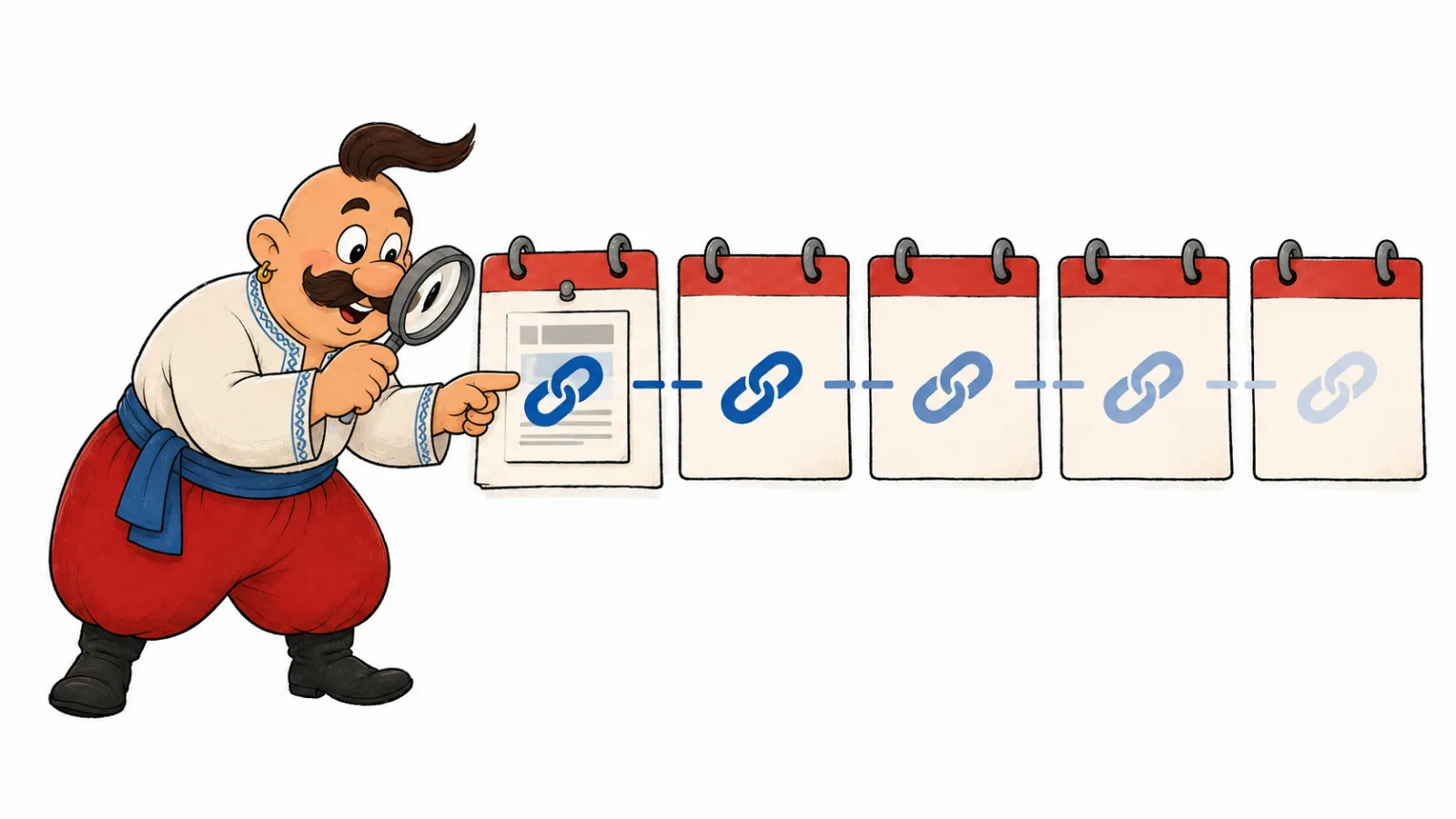
The public VYDAI demo's Sources report records five weekly dates from June 14 to July 12, 2026, in a Ukrainian gifts and souvenirs niche (site names anonymized). A gift shop homepage has 54 mentions, last recorded on July 12. The domain as a whole has 55 mentions across nine prompts in ChatGPT and Gemini.
In another example from the same demo, ChatGPT cited a souvenir maker's About page on June 21, then cited the domain's homepage on June 28 and July 5 for different prompts. That is a move between URLs on one site. For another shop, ChatGPT cited the English catalog page /en/souvenirs once, on June 14. After that, ChatGPT cited the shop's /shop page six times, most recently on July 12. Comparing the pages shows which one answers the prompt and whether an internal link is needed.
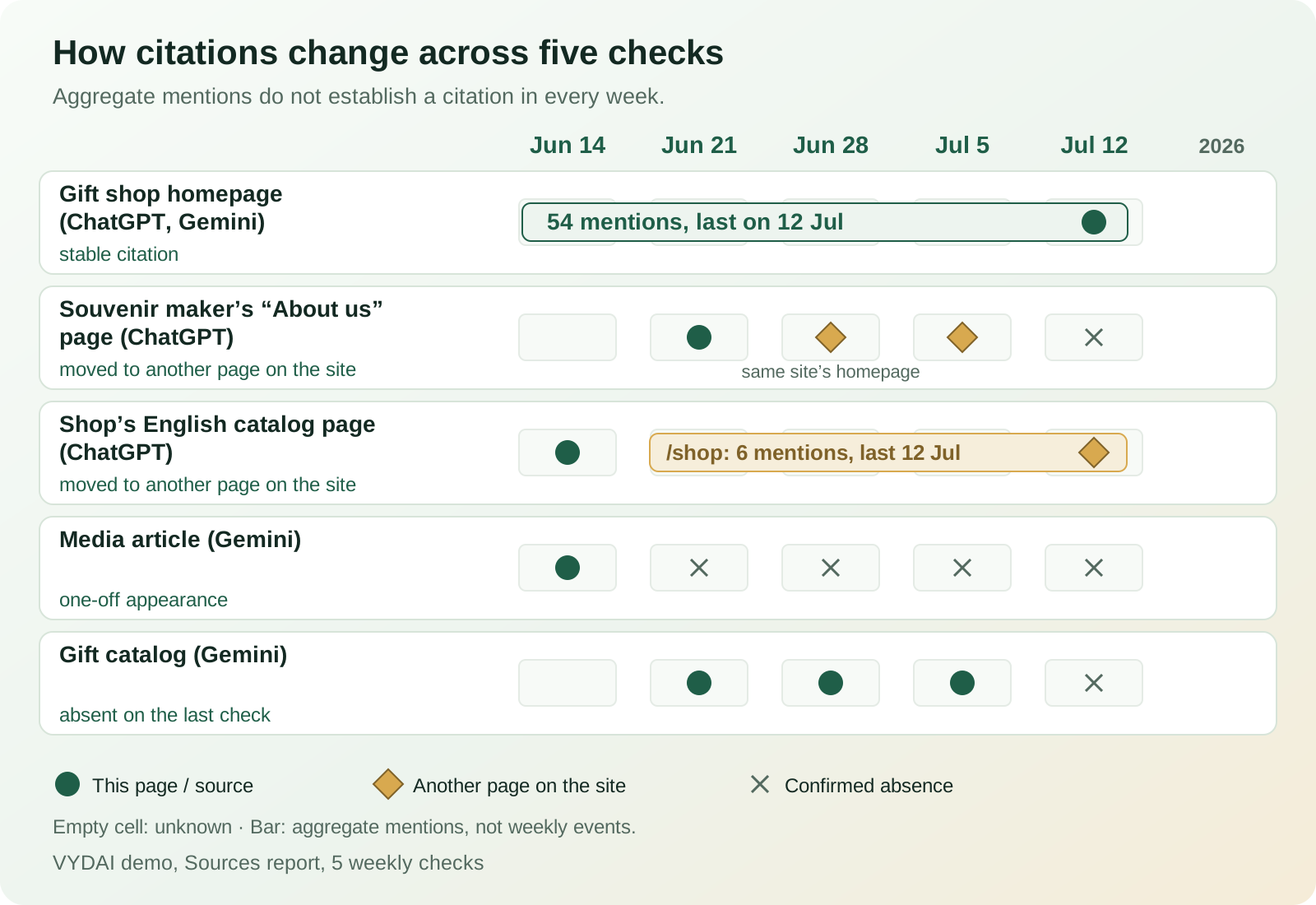
The demo covers five weekly dates and two systems, ChatGPT and Gemini. It shows examples of one-off appearances, repeated mentions and a move between URLs. Its history is too short to calculate a general decay rate or draw conclusions about the wider web.
How to check lost AI citations for a page
Compare a fixed sample, not a remembered answer from a random run. To track website citations in AI over time, keep one row for each URL, prompt, system and date. Before starting, agree whether you count a source in the answer body, the Sources panel or both.
- Use prompts for which the page has appeared before. Save their exact wording. Choose a working language and region.
- Record the system and mode. For ChatGPT, note whether web search was enabled. For Google, keep AI Overviews separate from AI Mode.
- Repeat checks at the same cadence, for example weekly. Save the date, full list of source URLs and the answer or a relevant excerpt.
- Compare the exact URL. If the domain remains but the page changes, label it as a move between URLs.
- Check at least two prompts that previously returned the page. When the absence repeats in the same system, investigate the cause.
- Record what appeared in its place. Compare the replacement source with your page to identify a change in intent, freshness or available evidence.
To build a balanced fixed prompt set, use our approach to choosing prompts for AI visibility monitoring. Do not create a new sample after every drop, or date-to-date comparisons lose their meaning.
How to check AI citations by model
Keep results from different systems separate. In its 2025 to 2026 study, Profound measured correlations in citation duration of 0.03 to 0.09 across most system pairs, and 0.12 to 0.17 across the three Google surfaces. Check ChatGPT, Gemini, Claude, Google AI Overviews and Google AI Mode separately.
According to Google's documentation on AI features in Search, AI Overviews and AI Mode use different models and techniques, and AI Overviews do not appear for every query. In Search Console, these features are included in the overall Web search performance report. It does not provide a log of each citation with the exact prompt and answer, so record the source URLs when analyzing a specific answer.
In Microsoft's June 16, 2026 announcement of AI Performance in Bing Webmaster Tools, the report, in public preview since February, shows where content is cited in answers across Microsoft Copilot, Bing and select partner AI experiences, along with the grounding queries behind citations. Citation Share is the share of citations for a grounding query that go to your site. Compare overlays a previous period. Microsoft says citation activity shifts with model changes, competing content, freshness and demand, so use the report to observe trends.
How to tell AI citation decay from normal fluctuation and find the cause
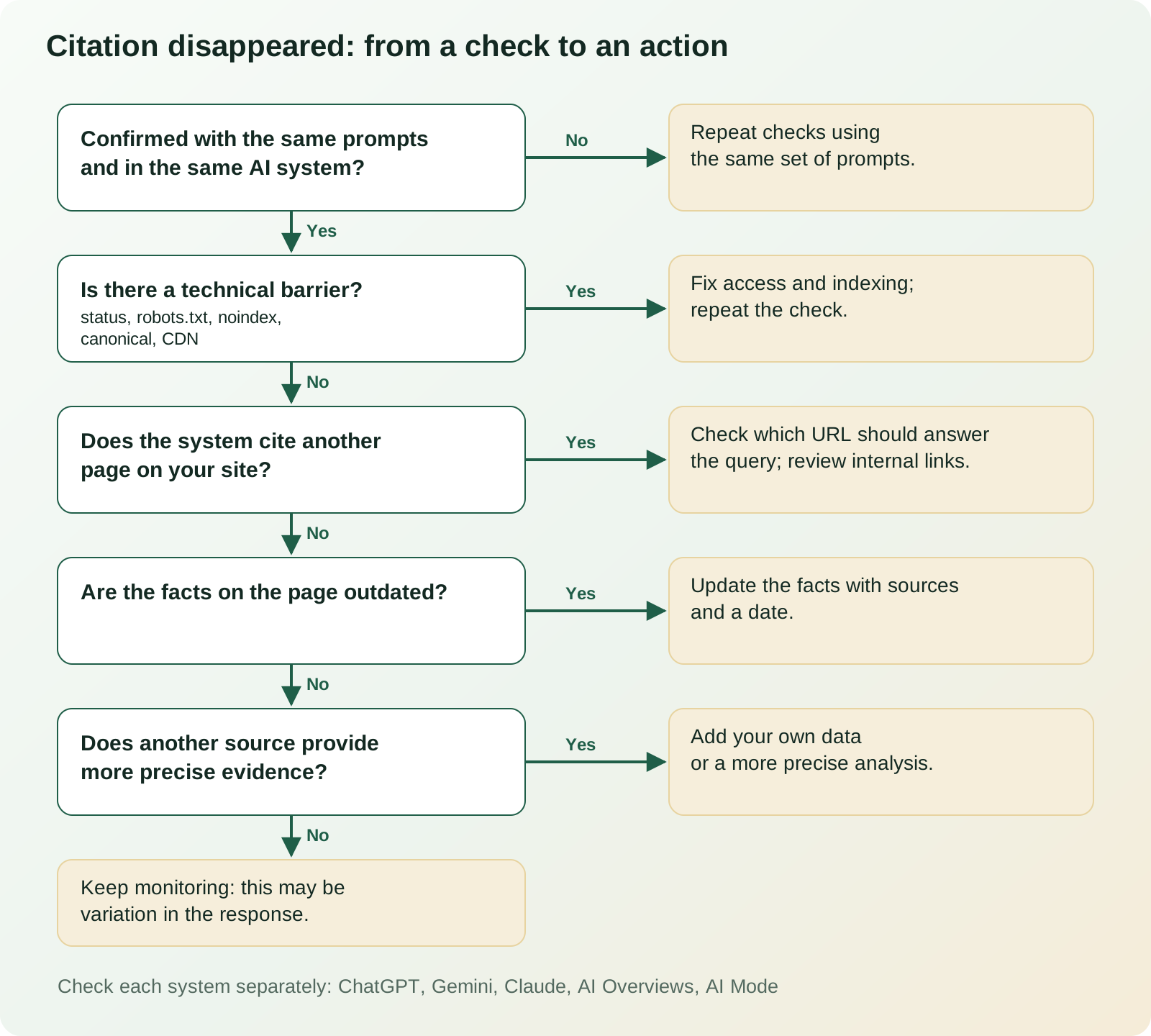
When you see a drop, classify the observation before editing the page. Each hypothesis needs its own test. To tell normal fluctuation from citation decay, compare the same prompts across multiple dates in the same system.
| Possible cause | Signal in the log | How to confirm | Smallest appropriate action |
|---|---|---|---|
| The answer changed between runs | The URL is absent once but returns in a later check | Repeat the same prompt in the same system and compare sources across dates | Label it as fluctuation and keep observing. Do not rewrite the page. |
| Search did not run or AI Overview did not appear | There are no sources in a particular answer, or the overview itself is missing | Repeat the prompt with web search enabled. For Google, check whether an AI Overview appears for that prompt. | Do not count a missing URL in an answer without search as a technical loss. |
| The URL is technically unavailable | Status, redirect, canonical, noindex, robots.txt, CDN/WAF response or visible text changed | Check the exact URL, response code, HTML and rules for the relevant crawler. For OpenAI, check OAI-SearchBot; for Google, check indexing and snippet eligibility. | Restore access or fix the technical issue. See our guide to checking AI crawler access. |
| Another page on your site replaced the URL | Your domain remains, but the source URL changed | Compare both pages with the wording of the prompt and check their roles and internal links | Decide which URL should answer this intent. See our guide to which website pages most often appear in AI answers. |
| Facts on the page are outdated | The answer or a new source has newer prices, policies, versions or dates | Compare the page's claims with current primary sources from your company or the data owner | Update only the facts and evidence that changed, and say what you checked. |
| A stronger external source appeared | A new URL answers the same prompt with fresher or more specific evidence | Open the new page and compare its data, coverage and relevance with your material | Add missing first-party data or a more precise analysis. For competitor representation, see why AI recommends competitors. |
| Intent or answer format changed | The same prompt now produces a different type of answer, and the sources changed with it | Compare old and new answer excerpts; check seasonality, context and system refinements | Check whether your page still addresses the current intent. Update only when there is a content gap. |
For the technical branch, OpenAI distinguishes OAI-SearchBot for ChatGPT search from GPTBot for collecting content that may be used to train models. Allowing one does not allow the other. OpenAI says it can take about 24 hours for systems to apply a robots.txt change for search.
For Google, check whether the URL remains indexed and eligible to appear with a snippet. Crawl permission, no noindex and a correct canonical make a page eligible for access, but do not guarantee a citation in an AI answer. If you suspect Cloudflare or another security layer is blocking access, inspect the specific event in its logs rather than relying only on a test request with a substituted User-Agent.
How to prioritize page updates
Prioritize pages where business value and confirmed loss meet. First check for failures that block access or make facts inaccurate. Then decide whether new content is needed. A URL's age alone is not a priority.
| Queue | Condition | Example decision |
|---|---|---|
| P1 | The page is critical for revenue or leads, loss is confirmed on at least two prompts, and the cause is clear | A service page has noindex or an outdated price. Fix the specific problem and schedule a new measurement. |
| P2 | The page matters, but a drop appears for only one prompt or one system, or the cause is unclear | Gather more checks, inspect the new source and review other site pages before creating a content task. |
| P3 | The page had one appearance, disappeared in only one check, or another page on your site already serves the intent | Record the observation. Do not rewrite the page if users still reach an appropriate source. |
In Profound's 2025 to 2026 sample, pages classified as “Report” faded fastest across all seven systems. Among sustained pages, their median half-life was 27 days, compared with 28 to 29 days for other types. Use this as context for prioritization, then decide based on the page's role and the freshness of its facts.
How to refresh a page after losing AI citations
Refresh a page after losing AI citations only after the log confirms a change and you have identified its cause. After a technical block, restore access and check the result. If a fact is outdated, update it with a link to a primary source. If another source has original measurements you lack, add only data your team can verify and publish.
When a prompt now requires a different type of answer, adjust the structure so readers can find the relevant criterion, comparison or example sooner. For new, verified evidence, consider how to find content gaps with ChatGPT query fan-out. Do not add unsupported sections just to make the page longer.
Google's guidance on publication dates in Search recommends showing readers a clear publication or substantial-update date and keeping it aligned with datePublished and dateModified in structured data. The date should reflect the actual publication or update, not the event the page describes.
After a change, save its publication date and repeat the same prompts in the same systems. Compare exact URLs, not only brand mentions. Google's instructions on requesting a recrawl for a URL say crawling can take anywhere from a few days to a few weeks.
How to track website citations in AI over time: a log template
To track website citations in AI over time, keep a table where each row represents one URL, prompt, system and date. The anonymized entries below come from the VYDAI demo's Sources report for June and July 2026. Site names are replaced with resource types. Prompts are translated from Ukrainian for this English-language example.
| URL | Prompt | System | Date | Cited? | What was cited instead | Change | Action |
|---|---|---|---|---|---|---|---|
| Gift shop homepage | “Where in Ukraine can I find a store with a wide range of original gifts?” | Gemini | Jul 12, 2026 | yes | none | no change | observe |
| Souvenir maker's About page | “List Ukrainian brands with original gifts and souvenirs” | ChatGPT | Jun 21, 2026 | yes | none | none | observe |
| Homepage of the same maker | “Who in Ukraine makes and sells original gifts and souvenirs?” | ChatGPT | Jun 28, 2026 | yes, another page on the same site | homepage instead of About page | move between site URLs | check which page should answer a prompt about the maker |
| Another shop's English catalog page | “List Ukrainian brands with original gifts and souvenirs” | ChatGPT | Jun 14, 2026 | yes, once | none | none | label as a one-off appearance |
| Gift catalog | “List Ukrainian brands with original gifts and souvenirs” | Gemini | Jul 5, 2026 | yes | none | none | observe |
| The same catalog | any prompt in the set | Gemini | Jul 12, 2026 | no | Sources contains no mention of the domain on this date | absent after three weeks of appearances | check two more dates, then diagnose |
Keep the log in a spreadsheet or add a CSV export after each check. Use one row per URL, prompt, system and date. The “What was cited instead” column distinguishes a lost citation from a switch to another page on your own site.
Frequently Asked Questions
Why did AI stop citing my website?
Common causes include answer variation, search not running, a technical problem, outdated facts, a stronger source or a change in your site's URL. Check these signals in order in the cause table.
What is AI citation decay?
It is a decline over time in how often a URL appears as a source in answers. To compare it, record how you count an appearance, citation share and the observation period.
How long does an AI citation last?
In Profound's sample of 883,000 pages across seven systems from September 2025 to September 2026, the median time from peak to half of peak citation share was 11 days for a page-system pair. In Scrunch and Stacker's cohort study of 3.5 million citation events across five systems from September 2025 to March 2026, the average time for half a cohort's citations to disappear was about 4.5 weeks. These are different metrics, not universal timelines for your article.
Does a brand disappearing from an answer mean its citation was lost?
No. A brand can be named without a link to a specific page. Check the answer's sources and compare the exact URL.
Does Search Console show citations in AI Overviews?
Google includes AI Overviews and AI Mode clicks and impressions in the Web search performance report. It is not a log of individual citations with the exact prompt and all source URLs. To check a specific answer, record its URL manually or with a monitoring tool.
How many checks are needed to call it a loss?
There is no universal scientific threshold. The working rule here is that a page first appears in at least two of the last three checks, then is absent in two consecutive checks in the same system. Confirm the pattern on two more prompts that previously cited it.
Should I change the publish date to regain AI citations?
Only after a real update. Changing the date without verified changes does not update the facts for readers. If no substantial edit took place, leave the date as it is.
How we do it in VYDAI
VYDAI's Sources report shows domains, page URLs, mention counts and the date of the last appearance. An expanded record shows the system, date, prompt and answer excerpt where a source appeared. Answer history also compares prompts, systems and dates and supports CSV export.
The demo shows the examples listed in the log above. VYDAI does not automatically alert you that a specific URL stopped being cited. You can see this from its last-mention date and check it in source history.
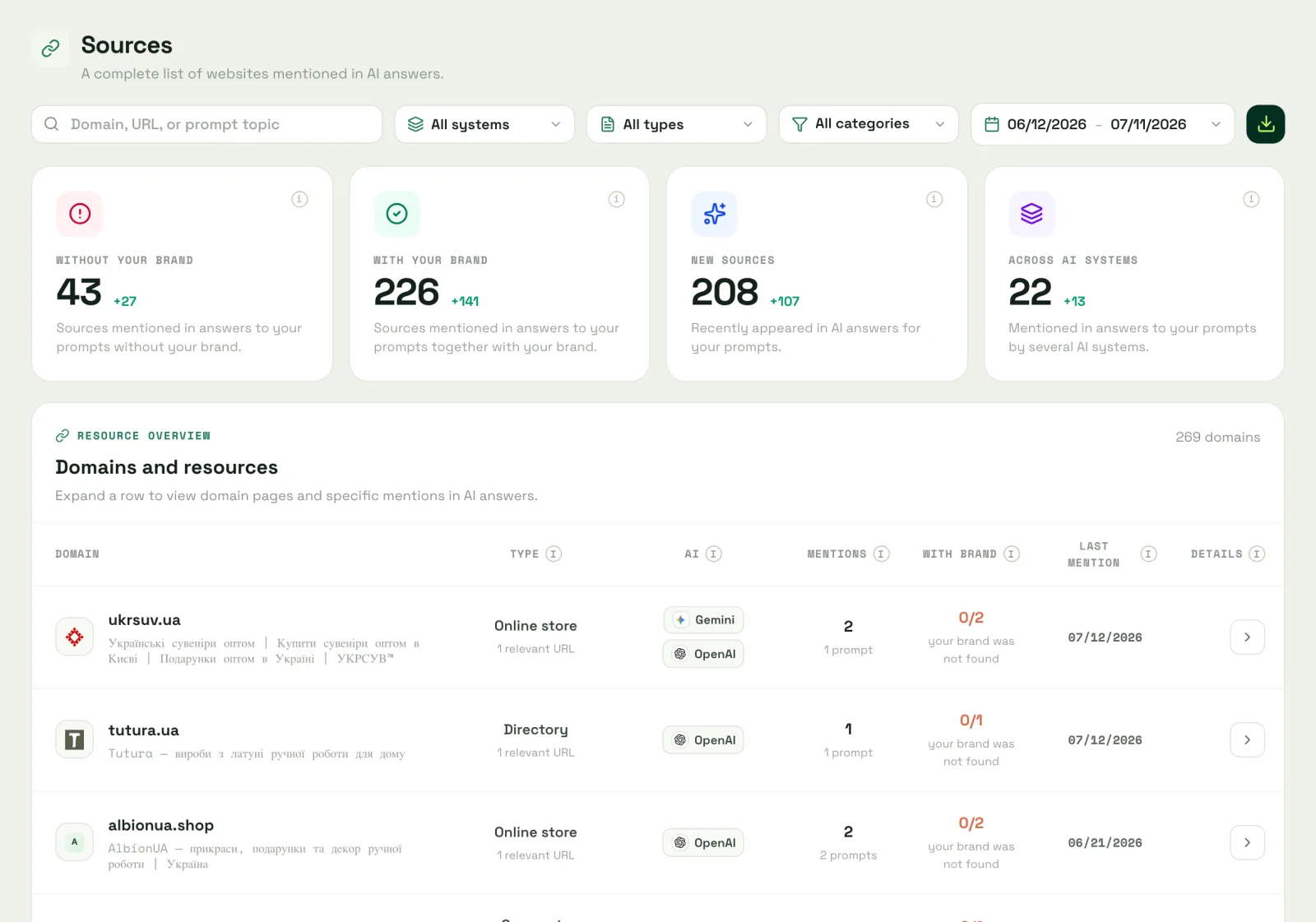
Open the VYDAI demo or create a workspace to see sources in the context of collected answers. For an initial check of a small prompt set, you can also keep this log manually.